There are projects that do not seek to impress, but rather to open a door. DOBOX Asia is one of them.
It is neither just another platform nor yet another cultural subscription box promising a trip to Asia while never scratching beneath the surface. DOBOX Asia is a narrative immersion—a space where you step into a story as you would enter a room: gently, with curiosity, discovering Japan, South Korea, and China through gestures, voices, places, and everyday details. It is a project that does not talk about Asia; it talks with it.
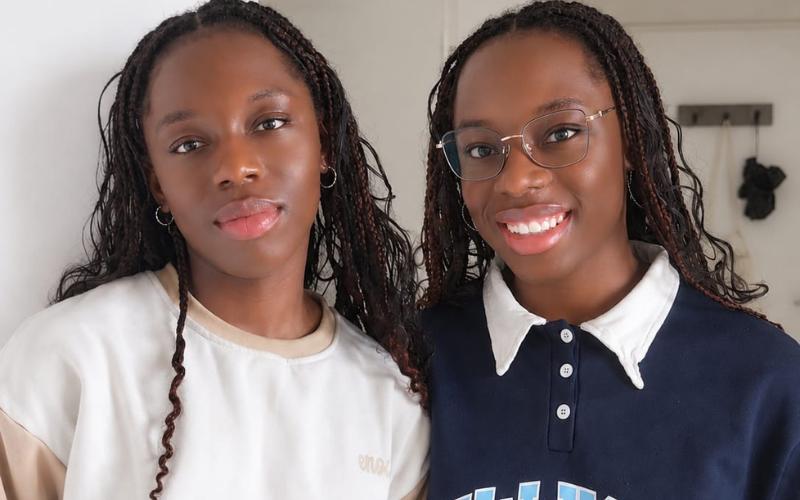
Behind this initiative are two sisters, Divine and Océane. Two perspectives, two sensitivities, and a shared passion. They never pretended to be experts, nor did they position themselves above those who love these cultures. They simply grew up with them—mangas, dramas, music, food, languages—and one day felt the familiar void: the desire to go further, to understand differently, to feel more deeply. Travel wasn't always an option, so they sought another way to cross borders. DOBOX Asia was born from that frustration, but above all, from a desire to share.
What sets DOBOX Asia apart is its storytelling approach. You are not a spectator; you are a participant. You observe, choose, interact, and progress through a story that unveils a culture from the inside. No clichés, no fast consumption, no parade of stock images. Here, you take your time. You listen. You feel. You learn.
An Exclusive Interview with the Founders: Divine and Océane
1. DOBOX Asia is not just a digital journey. It is a shift in perspective. Can you introduce DOBOX Asia and explain what inspired you to create this interactive cultural immersion concept?
"DOBOX Asia is a project that seeks to introduce Asian cultures in a more living, immersive, and less passive way. The project has evolved greatly since the beginning, but the core idea remains the same: we didn't just want to provide reading material or pretty pictures. We wanted a way to place the user in a situation where they observe, listen, interact, and sometimes try out words or gestures, so they can better understand what they are discovering. We don't aim to replace travel, books, or traditional classes. Instead, our goal is to create an initial encounter with a culture—one vivid enough to spark curiosity to go further and, above all, to look at things differently."
2. What was the catalyst that made you say, "We need to create a new way of discovering Asia"?
"Like many people, we grew up consuming massive amounts of Asian content: dramas, mangas, anime, music, cuisine... But over time, we realized that loving these universes doesn't necessarily mean knowing much about the actual societies and cultures behind them. What made us reflect deeply was that feeling of instant familiarity. You watch dramas for years, learn a few dishes or words, travel there for a few days, and you might feel like you know the culture well. In reality, a drama or anime is primarily meant to tell a story and entertain; it's not its job to teach us how a society functions. So we began looking for other ways to discover these cultures without relying solely on textbooks or documentaries. We wanted something more vibrant, where understanding happens through lived situations. Not finding exactly what we had in mind, we simply thought: why not try creating it ourselves?"
3. Why did you choose Japan, South Korea, and China as your first cultural universes to explore?
"These are the three Asian cultures we encountered earliest and engaged with most extensively over the years. We are also interested in many other countries, like Thailand or the Philippines, so we don't intend for DOBOX Asia to remain limited to three nations. However, Japan, South Korea, and China felt particularly compelling to start with because of their massive international cultural footprint today. Music, series, mangas, anime, gastronomy, fashion, beauty—so much circulates globally. This high visibility creates a sense of familiarity: people recognize many elements and might assume they already know the country. We found it fascinating to take that exact starting point and say: 'Alright, now let's look at what lies beneath that surface image.'"
4. What does DOBOX Asia offer that traditional videos, blogs, or guides cannot provide?
"The main difference for us is the role given to the individual. When you read an article or watch a video—even a great one—you remain a spectator. In a DOBOX immersion, we strive to make the user an active participant. They might need to observe before acting, listen to someone, respond, try out a few words, understand a gesture, or figure out why a situation unfolds a certain way. Cultural information is delivered in context. Instead of simply stating, 'here is a social rule in Korea,' we prefer to place the user in a situation where understanding that rule becomes necessary to grasp what is happening. Videos, blogs, and guides remain valuable—we use them heavily ourselves. We simply propose another way of discovering: shifting from 'someone is explaining a culture to me' to 'I find myself in a situation where I need to understand it.'"
5. How do you construct your immersions? What cultural elements are essential to you?
"We generally start with a theme or a situation we want to explore. But before building the experience, we try to understand what people would genuinely want to understand, discover, or experience. Their questions often give us insights we wouldn't have thought of on our own. Afterward, we converse with our correspondents, foreign friends, and individuals deeply familiar with daily life there. We ask about their habits, what seems normal to them, what a foreigner might misinterpret, or what they themselves would want people to understand. We cross-reference these discussions with serious, official sources as much as possible, then build the story around them. In the Han family immersion, for instance, the family isn't just a backdrop; being invited into their home allows users to naturally discover gestures, habits, family relationships, vocabulary, social rules, and mealtime traditions. We always weave together multiple dimensions: story, people, language, behavioral rules, and settings. Above all, we refuse to present a country solely through an aesthetic or idealized lens. Culture is far more complex. Our goal is for someone to finish an immersion thinking: 'I had a great time, but more importantly, I now understand something I couldn't see before.'"
6. What is your primary objective: education, immersion, entertainment, cultural transmission... or a mix of all three?
"Our objective is a blend of all three, guided by one core thread: cultural transmission through immersion. When we started DOBOX Asia, it wasn't for commercial motives; it was to share and transmit culture as it truly is. Because every culture has a history, a 'why'. Consuming a culture and loving a country without seeking to understand it feels a bit empty, doesn't it? We wanted to let people live this discovery rather than just watch it. Many people cannot travel or lack the means to visit Japan or Korea. Even when traveling, people often remain spectators—tourists without truly understanding or being actors in their discovery. So we wanted to create a space where you enter a story, make choices, and learn by living. Education is present, but delivered through emotion. Entertainment is present, but serves discovery. Immersion is the vehicle. For us, a culture isn't just dates or photos; it is understood through gestures, atmospheres, encounters, and daily details. To summarize: it's a mix of all three, dedicated to transmission."
7. How do users react when they discover your interactive experiences for the first time?
"Honestly, at first, people don't always fully understand. The concept is unique, and this model isn't something you see every day. Often, they think it's a travel guide or some kind of game, but it's not quite that. It's a bit hard to explain in words. However, curiosity is a constant reaction. People are very interested, surprised, and often enthusiastic about trying something new. Once they experience the immersion, that's when they understand the 'why'. They realize they aren't mere spectators, but actors and insiders of the culture they cherish. Early feedback has been overwhelmingly positive. People love the aspect of learning by living. Being an actor, making choices, discovering gestures and daily atmospheres—that leaves a lasting impression. Many tell us it makes them want to go further, travel, or learn the language. We also receive constructive criticism, which we welcome with humility because that's how the experience improves. But overall, the primary reaction is surprise—a pleasant surprise."
8. What difficulties have you encountered while creating such a unique, narrative project?
"The challenges have been numerous, but they've taught us a tremendous amount. First, there's all the technical development. We aren't professional developers, so we code with the help of AI. But it's not magic: there are constant hidden errors, bugs appearing at the last minute, requiring endless testing, fixing, and restarting. It's meticulous work, especially since we are meticulous and want every detail to be right. Then there's the challenge of creating true immersion without slipping into 'spectator' mode. We don't want passive viewing; we want interaction, choices, and emotional resonance. Yet, we also need to impart cultural knowledge without making it feel like a traditional classroom lecture. Striking that balance is one of our greatest hurdles. Culturally, we are very careful to avoid errors or generalizations. We conduct extensive research, but public sources can be limited or too broad. Therefore, we turn to native correspondents to validate information, grasp nuances, and ensure our narrative is accurate and respectful. Finally, the initial difficulty was explaining the concept itself. Since this hybrid format didn't exist around us, conveying it clearly at first was tough. We had to learn to simplify it without diluting its essence."
9. Do you plan to add other countries or different types of experiences in the future?
"Yes, absolutely. We started with Japan and Korea, and China is part of our initial lineup. But our vision goes far beyond that. We would love to explore other East and Southeast Asian countries, and eventually, other world cultures. The idea is to make DOBOX Asia a bridge between cultures—not just a collection of content, but a space where you can travel, learn, and feel. We also want to develop different formats: shorter experiences, seasonal chapters, thematic immersions. Long-term, we dream of creating immersions for French, Spanish, and other cultures as well. Travel shouldn't be reserved only for those who can afford plane tickets. We want everyone to experience the world from home with respect and curiosity."
10. What message would you like to pass on to those discovering Asia through DOBOX Asia?
"If we could pass on one message, it would simply be: 'Stop consuming Asia; live it.' Today, Asia is heavily consumed. We all grew up with a piece of its culture: a series, a person, a dish, a song. But over time, with endless commercial clichés looping around, many people settle for passive consumption while believing they understand a culture they actually don't. We hold narrow views of Japan, misconceptions about China, and a superficial image of Korea. Yet there is a history behind every object, every gesture, every person. When we say we love a country, it means trying to understand the 'why' and 'how'. Culture isn't a backdrop or a product; it's an encounter. So rather than scrolling and watching passively, try to understand, live, and feel for yourself. Have fun discovering. Because traveling isn't just about changing countries; it's about changing your perspective. And if we can, on our small scale, help make that encounter truer, more respectful, and deeper, then we will have succeeded. Thank you to everyone placing their trust in us."
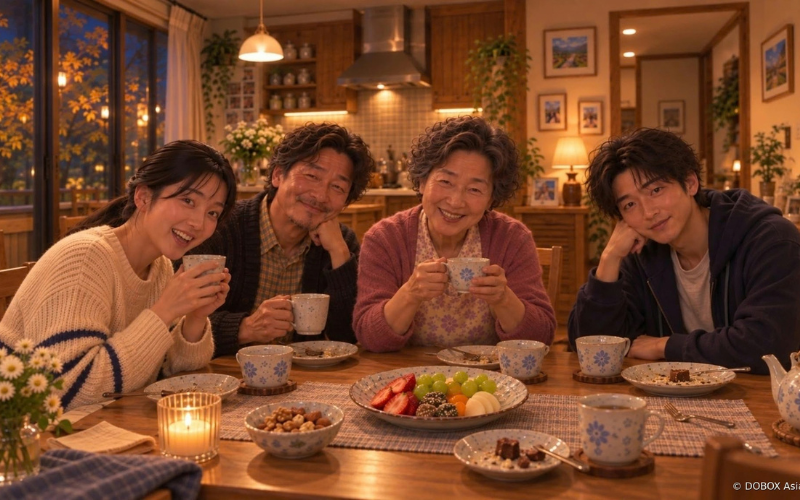
At the end of this immersion, one realizes that DOBOX Asia is not just a cleverly designed project. It is something to be lived. You don't click just for the sake of clicking; you don't "consume" culture the way you scroll through a video feed. You move forward slowly, listen, observe, repeat words, and find yourself smiling at a detail, an atmosphere, or a phrase you have never heard quite like this before.
Having been selected to test this project, I honestly didn't expect this. I anticipated a nice, perhaps playful immersion, but DOBOX Asia goes much further. You truly learn something—not just trivia or pretty pictures, but actual gestures, customs, and ways of doing things. You discover why chopsticks are placed a certain way, why a specific gesture carries meaning, why a habit exists. And above all, you learn the language. Korean, for instance. You are prompted to repeat words, phrases, and expressions, finding yourself pronouncing, trying, and trying again without pressure or judgment. It is natural, gentle, and almost intimate.
What makes it beautiful is that you don't need to be an expert. No prior travel required, no need to speak Japanese, Chinese, or Korean. DOBOX Asia is built for those who love, who are curious, and who want to feel rather than simply watch—for those who want to enter a culture without reducing it to three clichés and two photos.
DOBOX Asia offers exactly that: a simple, human, and accessible way to experience Asia differently.
Copyright © DOBOX Asia & Divine and Océane / Jason Edwards